Some words carry far more meaning than their modern descendants reveal.
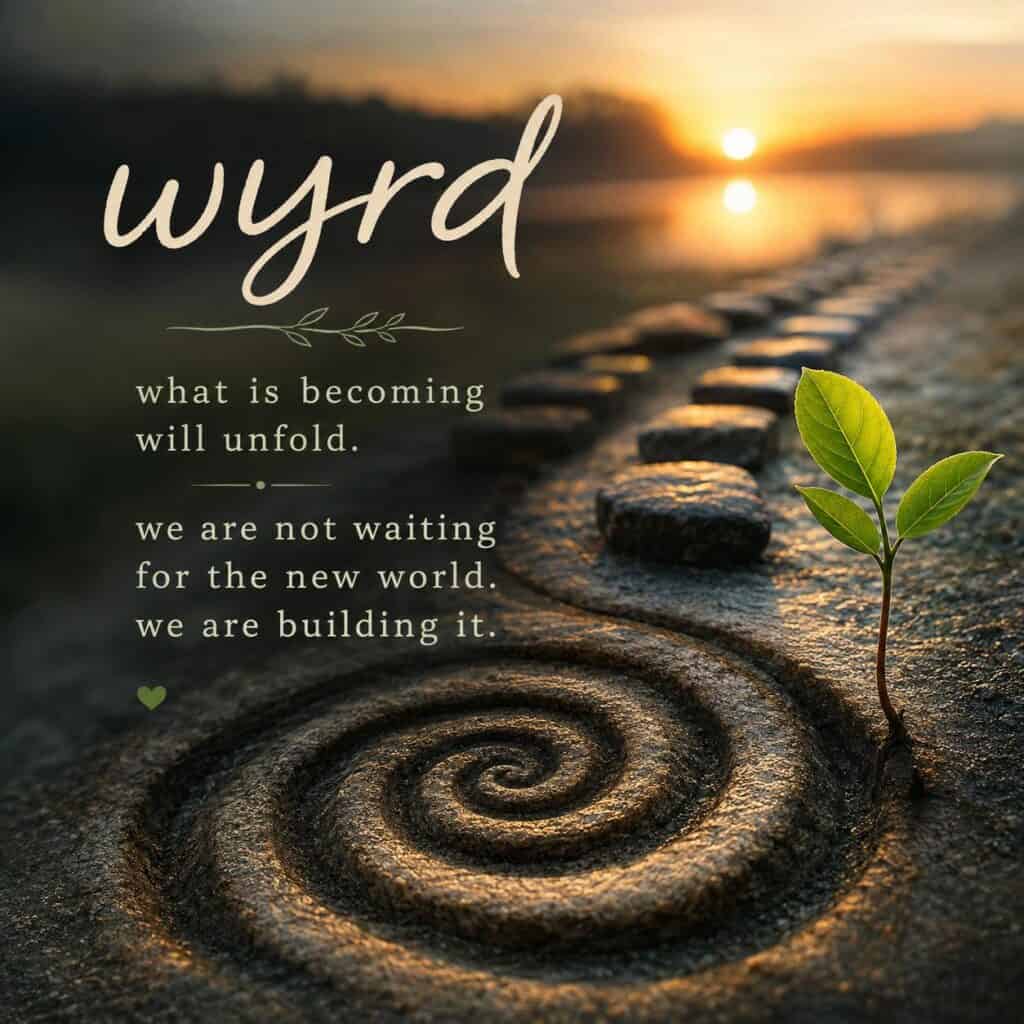
One such word is wyrd.
Today, it survives only as the word weird, having lost much of its original beauty along the way. Yet for the Anglo-Saxons, wyrd described something profound.
Historically, Old English wyrd comes from the verb weorþan — to become, to come into being, to unfold. It was not simply "fate" in the sense of an inescapable destiny. Rather, it referred to the unfolding of events through the interaction of character, choice, and circumstance.
An old Anglo-Saxon saying declares:
Often translated as "Fate is fully determined," many scholars suggest a more nuanced understanding:
Or perhaps:
That is quite different from fatalism.
It suggests that the future is not merely something that happens to us. It is something continually shaped by the choices we make, the habits we cultivate, and the character we develop.
The Assemblies are not simply seeking to change a political system.
They are changing what is becoming.
If people remain fearful, divided, dependent, and waiting for others to act, then one kind of future naturally unfolds.
If people begin gathering, learning, taking responsibility, reconciling differences, sharing skills, caring for one another, and governing themselves peacefully, then an entirely different future unfolds.
In that sense, wyrd is not the destination.
It is the process of becoming.
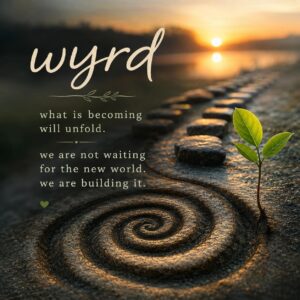
We are not waiting for a new world.
We are building it.
Every Assembly meeting.
Every Public Education Tour book delivered.
Every practical skills workshop.
Every neighbour helped.
Every disagreement resolved with dignity.
These are not isolated acts.
They are threads woven into a different wyrd.
There is an interesting parallel here.
Correcting one's political status is usually described as changing one's legal or political standing. Yet many who have walked that path describe something much deeper than paperwork.
They speak of a change in how they see themselves and their responsibilities.
A shift from:
That, too, is a different becoming.
The documents alone do not create a new man or woman.
They simply acknowledge an inner transformation already taking place.
Paper may record the journey.
It does not create it.
The opening words of the Gospel of John declare: "In the beginning was the Word..."
The Greek word translated as Word is Logos, carrying meanings such as reason, principle, and ordering intelligence.
Wyrd speaks of something different.
Where Logos points toward the principle that orders reality, wyrd points toward the unfolding of reality through time.
One might poetically say:
In the beginning was the Logos. In every moment is the wyrd.
Or, perhaps closer to what the Assemblies are seeking to create:
The future is not something we inherit. It is something we become.
Perhaps this is why our emphasis on building peaceful abundant communities feels so significant.
It shifts our attention away from escaping the old world and toward consciously shaping what comes next.
The old meaning of wyrd invites each of us to participate in the nation's becoming.
Not through grand gestures, but through ordinary acts of courage, responsibility, service, forgiveness, stewardship, and community.
The question, then, is not simply:
"What kind of nation do we want?"
It is:
For in the end, our collective wyrd is nothing more—and nothing less—than the unfolding of the choices we make together.