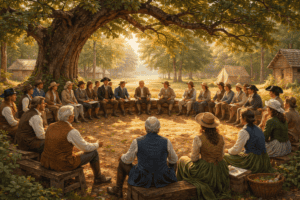
Over the past few years, many of us have been doing the work of assembling. We’ve been meeting locally, forming committees, testing ideas, and learning, sometimes the hard way, what it actually takes to govern ourselves peacefully and lawfully.
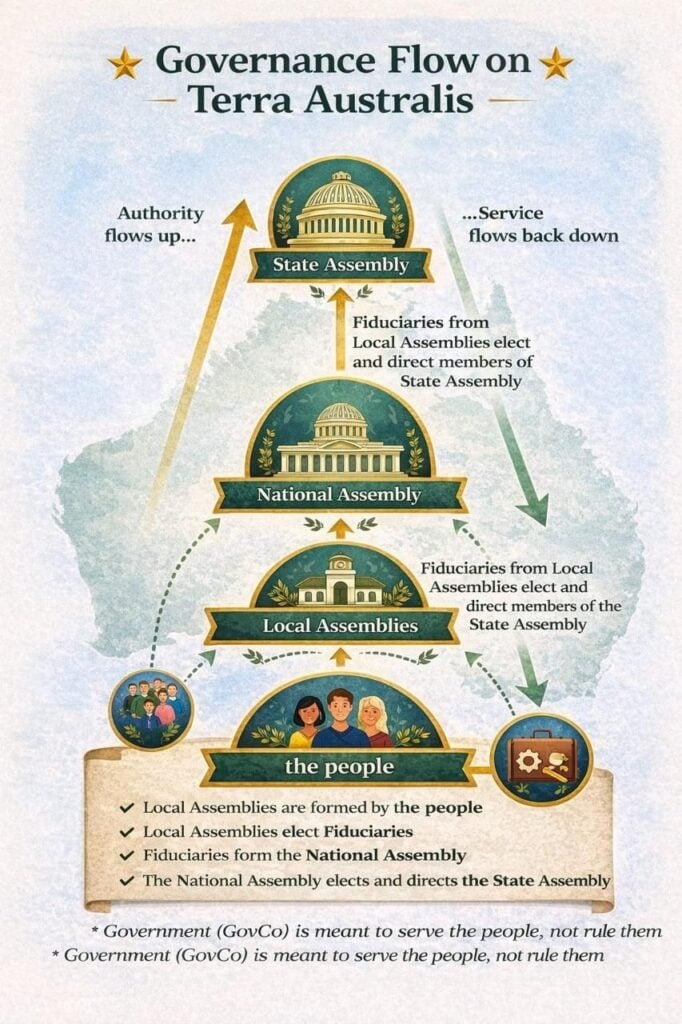
One of the things that has become clear is this: if we want to be taken seriously by ourselves and by others, we need shared clarity. Not rules imposed from above, but a common comprehension of how authority flows, how decisions are made, and how responsibility is carried.
That’s why we’ve drafted the Terra Australis Governance Handbook - link: Handbook
This handbook is written in plain English. It’s not legalese, and it’s not corporate process. It’s a practical guide to how assembly-based governance works on Terra Australis, grounded in first principles and lived experience.
The Governance Handbook explains:
Importantly, it doesn’t aim to control local assemblies or lock in rigid procedures. Each Local Assembly remains self-governing and determines how it organises itself in response to local needs, according to the will of the people. The handbook exists to provide shared structure and comprehension, not to replace local judgement or initiative.
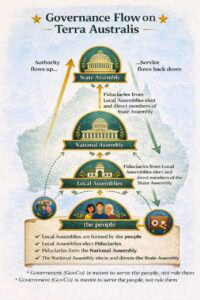
At the heart of the handbook, and of TASA itself, is a simple idea: the people assembled are the source of all governing authority.
Local Assemblies are where that authority is expressed. National and State Assemblies exist to serve and coordinate what has already been decided locally, not to override it. Government, or GovCo, is treated for what it is: a contracted service provider.
This matters, especially during the transition we are in now. Existing beneficial services continue, but they do so by delegation and alignment with the expressed will of the people, not by default authority.
The handbook makes something else very clear. Participation is voluntary, but it matters.
Active participation helps protect the freedoms and rights of the people. Showing up, doing the work before the vote, serving on committees, and taking responsibility for decisions is how self-governance actually functions. One of the surest ways to protect your freedom is to advocate for freedom for all. Your vote is not a gesture. It carries real consequences for neighbours, land, and future generations.
No one is excluded from the Assembly without reason. People acting in good faith are welcome to learn, observe, and contribute. At the same time, agreed norms and behaviour exist to ensure assemblies remain safe, focused, and able to do their work.
As with everything we are creating, this handbook is a draft. It is a living document and will continue to evolve as assemblies mature, our collective experience grows, and shared agreement forms around what works best at a national level. It is being shared now so State Nationals can read it, sit with it, and comprehend the governance framework we are building together.
Suggestions for improvement are welcome and should be raised through your Local Assembly or relevant committee, where they can be considered openly and constructively.
Read it slowly. Discuss it locally. And most importantly, start living it.