Sovereignty is one of the most misunderstood concepts of our time. For generations, those in positions of power have happily taken advantage of this confusion—using labels, ridicule, and word-traps to convince people that anyone claiming sovereignty is dangerous or arrogant. But here is the truth:
You should never claim to be “a sovereign,” and not for the reasons the rulers want you to think.
Let’s start with what the legal world itself admits.
Black's Law Dictionary Fourth Edition:
Read that again carefully. A person is a legal construct. A sovereign is not.
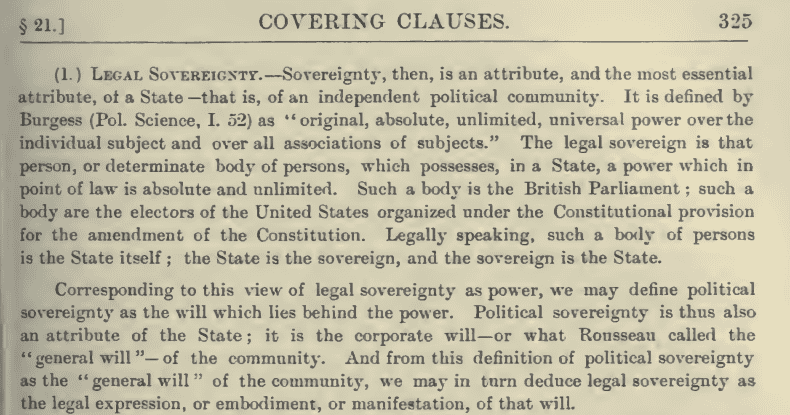
Why? Because only an unincorporated body can be truly sovereign. Incorporated governments—and the countless franchises beneath them—can only ever be quasi-sovereign.
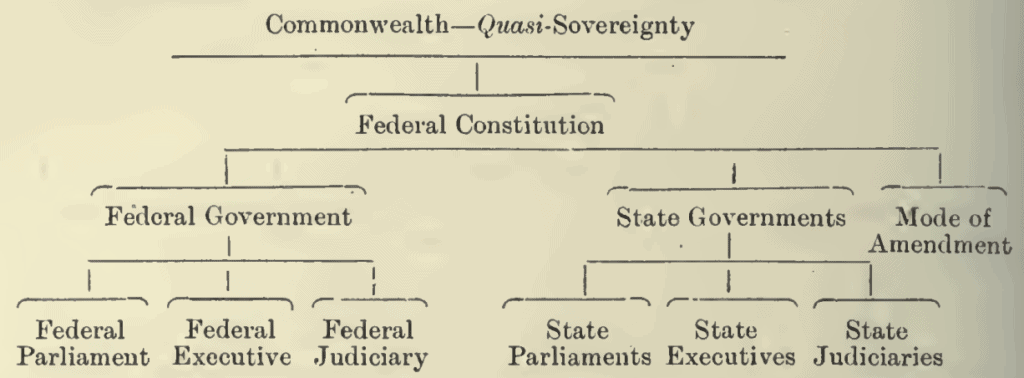
The Annotated Constitution of the Commonwealth:
“Sovereignty, therefore, resides in the State, but it is principally manifested through the Government, its creature. Every competent organ of government, legislative, judicial, or executive — Parliaments, courts, constitutional assemblies, electorates in their legislative capacity, Kings, Presidents, Governors, Executive Councils — are organs through which the sovereign power is exercised. In one sense the aggregate of these bodies within a State, as exercising the sum-total of sovereign power, may be considered as depositaries of sovereignty ; but in another and a truer sense sovereignty is located in the ultimate legislative organ — the supreme organic unity which in the last resort controls all the others.”
There is a great deal of information in that paragraph:
Black's Law Dictionary Fifth Edition:
“Government: Republican Government. One in which the powers of sovereignty are vested in the people and are exercised by the people, either directly, or through representatives chosen by the people, to whom those powers are specially delegated.
When the people Assemble they create a sovereign body. When you elect Deputies to your State Assembly, you delegate them some of your authority, creating a sovereign state.
Black's Law Dictionary Fourth Edition:
That sounds like a lot of power? And the people assembled into a sovereign body have that power - whatever the expressed collective will of the people decides. The corporations don’t.
Because America was once free, it is not uncommon for the people’s authority to be enshrined in State codes, for example:
“CALIFORNIA GOVERNMENT CODE - SECTION 11120 et seq.
11120. It is the public policy of this state that public agencies exist to aid in the conduct of the people's business and the proceedings of public agencies be conducted openly so that the public may remain informed.
In enacting this article the Legislature finds and declares that it is the intent of the law that actions of state agencies be taken openly and that their deliberation be conducted openly.
The people of this state do not yield their sovereignty to the agencies which serve them. The people, in delegating authority, do not give their public servants the right to decide what is good for the people to know and what is not good for them to know. The people insist on remaining informed so that they may retain control over the instruments they have created.
This article shall be known and may be cited as the Bagley-Keene Open Meeting Act.”
These lands – Terra Australis – have been a penal settlement and colony since 1788 – we have never been free – until now.
If you have been watching TASA for a while you will have come across the word ‘suveran’, and probably wondered what it is about.
Noah Websters Dictionary 1828:
According to the 1560 Geneva Bible, “God created the man in his image” and looked at His creation and saw it was good (perfect).
Interestingly, I have not been able to find suveran in a legal dictionary.
When suverans assemble, you create a sovereign governing body that has the power and authority to direct the governmental service provider corporations (Government franchises – “the fish of the sea” and the “foul of the heaven”).