
From Terra Australis States Assembly
Local Assembly geographic jurisdiction
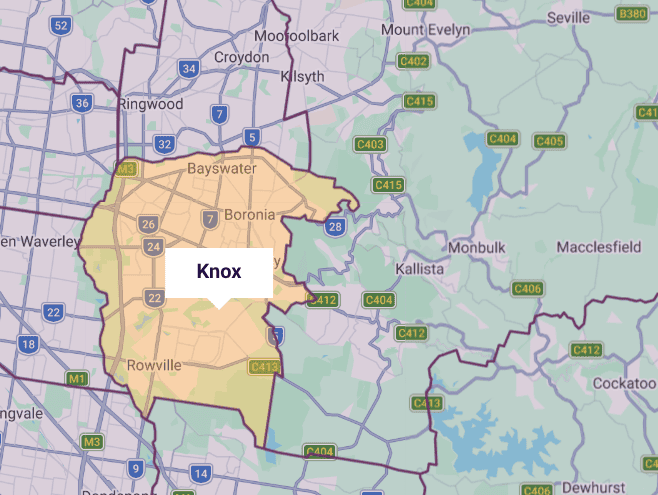
How self-governance chooses its own shape
One of the practical questions that naturally arises as Local Assemblies form is:
“What area does this assembly actually serve?”
This is not a trivial question.
Clear geographical boundaries help people comprehend where they belong, how decisions are made, how responsibilities are shared – and the extent of the geographic jurisdiction of the Local Assembly.
At the same time, self-governance requires that boundaries are chosen by the people themselves, not imposed from above.
This article explains:
- why council regions were chosen as a starting point, not a rule
- why assemblies must ultimately decide their own boundaries
- how boundaries can evolve over time
- and what questions assemblies should be asking now
Why council regions were chosen as an initial focus
In the early stages of assembly building, council regions offer several practical advantages:
they are already clearly mapped and widely comprehended
most people know which council area they live in
council decisions directly affect daily life
concentrating people within a larger, recognisable area helps focus attention on local governance issues
it makes it easier for new State Nationals to find their assembly
councils are the front line for implementation of the Global agendas, such as those imposed by the UN and WEF
one assembly for a complete council region also means more State Nationals (the actual authorities) are concentrated on directing a single council
Importantly, this choice was strategic, not ideological. It was never intended to create a permanent structure or a top-down mandate.
Council regions are a convenient container, not a declaration of authority.
Why assemblies must choose their own boundaries
Self-governance only works if authority remains with the people at all times. That means:
no central body decides where an assembly begins or ends
no one is compelled to join a particular assembly
no boundary exists unless the people affected agree to it
An assembly that has its boundaries imposed is already undermining the very principle it exists to uphold.
For this reason, each Local Assembly is encouraged to:
- openly discuss its geographical scope
- agree on boundaries by the expressed collective will
- document those boundaries clearly
- and publish them so everyone knows where they stand
Metes and bounds: clarity without rigidity
One practical way to do this is through a metes and bounds description — a plain-English explanation of where an assembly’s area begins and ends, using recognisable features such as roads, rivers, landmarks, or council lines.
This approach has several benefits:
- it creates clarity without complexity
- it avoids jargon and technical language
- it can be comprehended by anyone
- it can be changed later as circumstances evolve
Boundaries are not frozen in time. As populations shift, assemblies grow, or new assemblies form nearby, boundaries will be adjusted — always by the people, always transparently, and hopefully by consensus.
What about people outside the area?
A common question raised by coordinators is how to respond when:
- someone lives outside the current boundary
- there is no assembly in their area yet
- distance makes participation difficult
- or there are personal or practical reasons they do not wish to join the existing assembly in their council region
There is no single “correct” answer — and that is by design.
Possible approaches an assembly might choose include:
- welcoming observers or guests without decision-making authority,
- offering support to help people form a new local assembly
- allowing temporary participation while a new assembly is being established
- collaborating across boundaries on shared concerns
What matters is that these decisions are made locally, openly, and in good faith.
Common sense and common decency prevails
If you find yourselves considering annexing part of a neighbouring council region, always at the request of attendees at your Assembly, there are a few steps that should be taken:
- get agreement from the neighbouring Assembly (if it exists) as there may be other State Nationals affected by the decision and they get a say too
seek authority from your General Assembly - consider the ramifications of now having two separate councils delivering services to your assembly, and the real ability to effect change
Assemblies will need to decide how they cooperate with neighbouring assemblies when issues span multiple areas.
This is not a problem to be solved centrally, but a skill to be developed locally.
Coordination does not require control.
Cooperation does not require hierarchy.
Questions assemblies should be asking now
Rather than looking for fixed rules, assemblies are encouraged to ask thoughtful questions, such as:
- What area do we currently feel responsible for, and why?
- Does this boundary make participation easier or harder for people?
- Are we clear and transparent about where our boundary lies?
- How do we welcome people who live just outside it?
- What would prompt us to revise our boundary in the future?
- How do we cooperate with neighbouring assemblies on shared concerns?
- Is annexing the best option, or do we assist a new Assembly to get started?
- Are our decisions reflecting the actual will of the people involved?
These are not questions to be answered once, but revisited as the assembly matures.
The deeper principle
At its heart, this is not really about maps or lines on paper.
It is about remembering that:
- assemblies exist to serve people, not territory
- authority flows upward from the people, not downward from the broader structures
- clarity supports trust
- and flexibility supports growth
When assemblies choose their own boundaries, revise them openly, and work cooperatively with others, they are not just organising space — they are practising self-governance in its most practical form.
And that is the point.
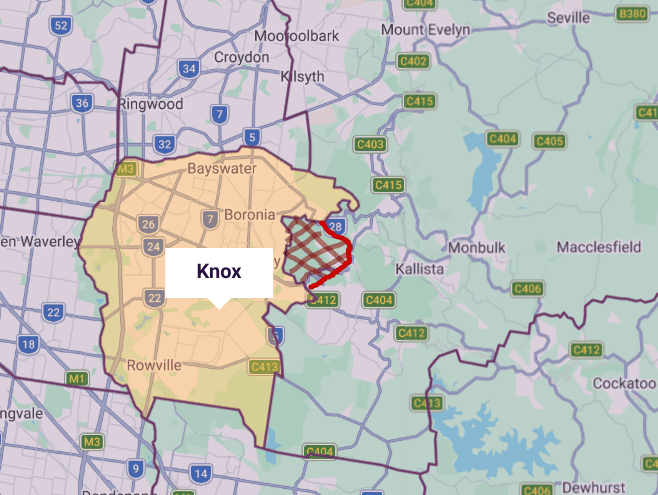
https://maps.abs.gov.au/ this website may be useful
Shared from Terra Australis States Assembly. View the national original
Back to national updates